A Comprehensive Indoor Environment Dataset from Single-Family Houses in the US

This paper presents a dataset capturing indoor environmental factors—including temperature, humidity, air quality, and noise levels—collected from 10 sensing devices installed in various locations within three single-family houses in Virginia, USA. The primary objective was to monitor and analyze indoor environmental conditions over time. Data were recorded at one-minute intervals for approximately one year, resulting in over 2.5 million records. To support the development of accurate building performance models, the paper includes actual floor plans with sensor placement details. It also outlines the methods used for data collection and validation. The dataset can be leveraged to advance research in areas such as building energy consumption, occupant behavior, predictive maintenance, and other applications related to smart and sustainable buildings.

Keywords

Indoor environment dataset; remote sensing; IoT data collection; distributed data infrastructure

CPS 2025 Workshop Recap | Grateful and Inspired!

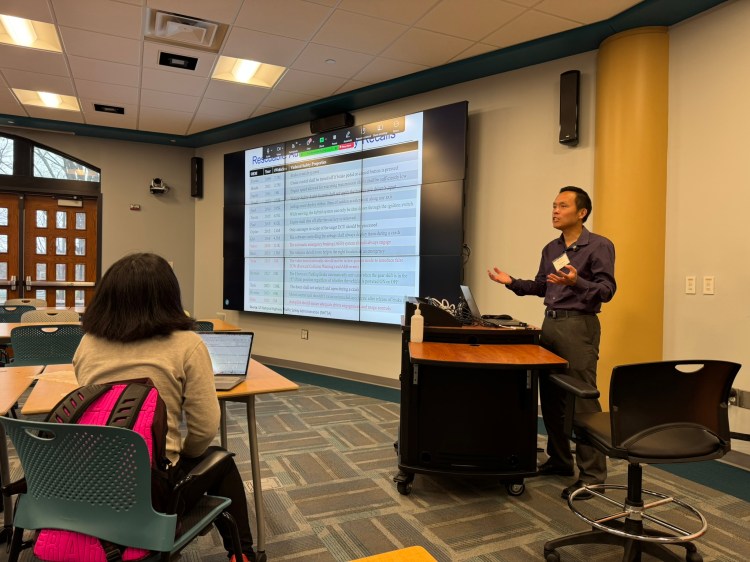
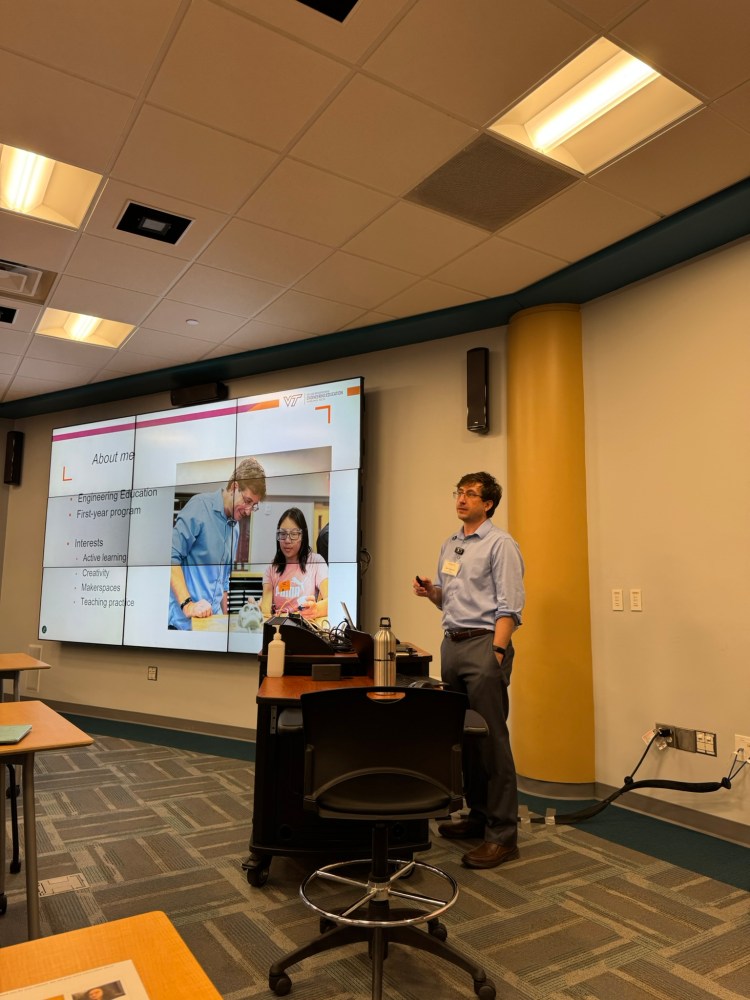
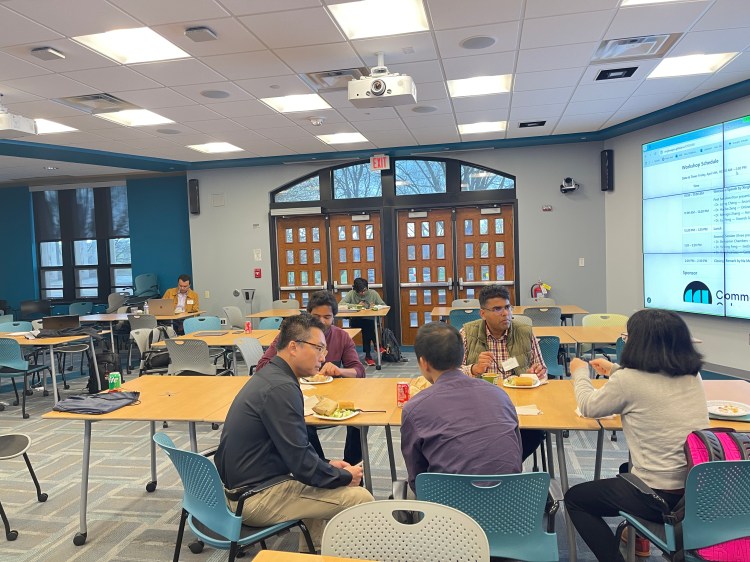
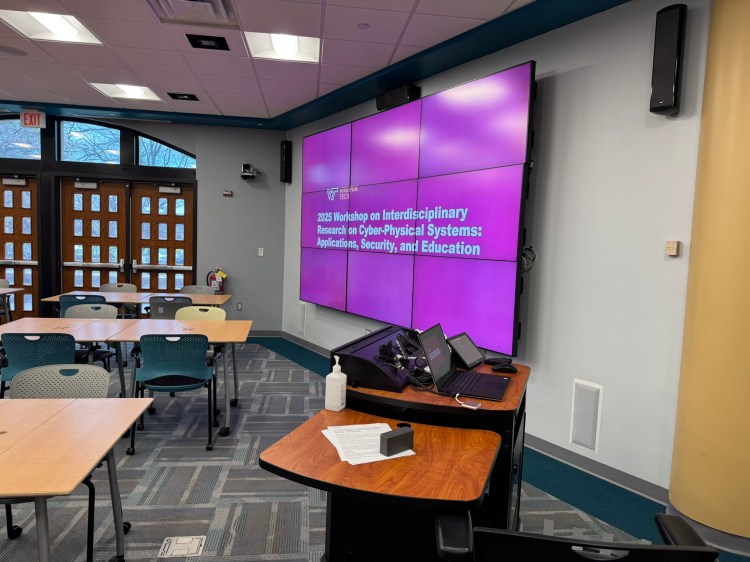
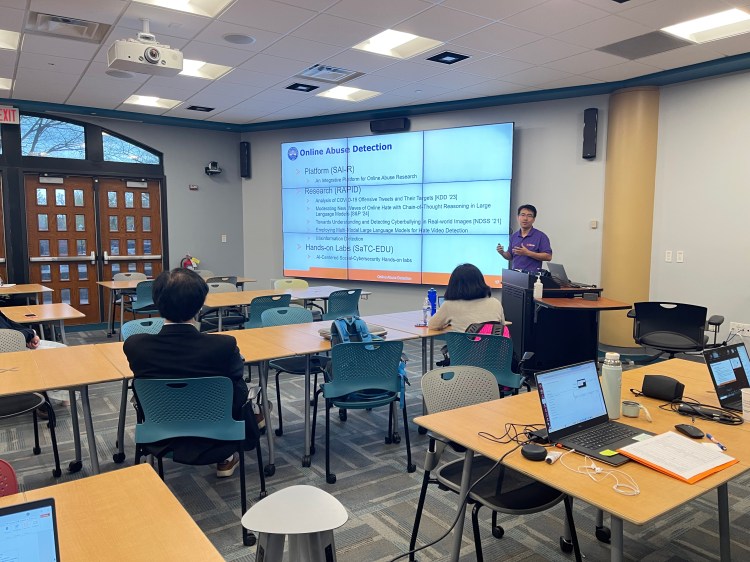
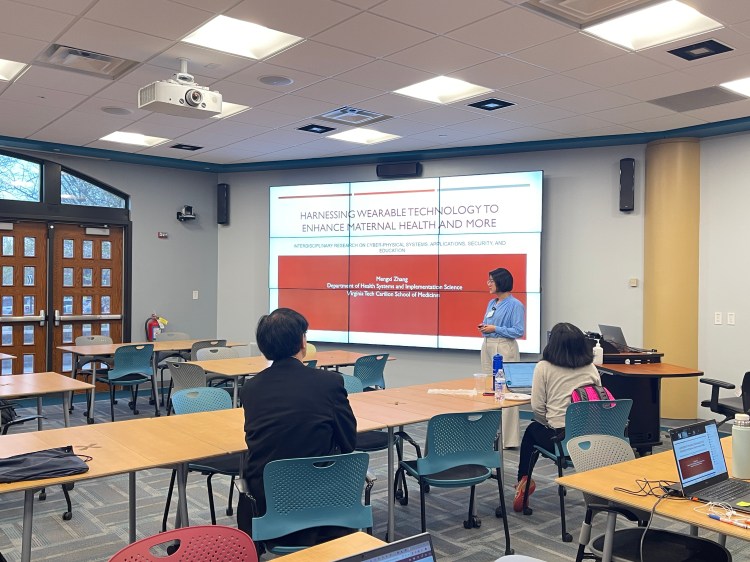
On April 4th, we hosted the 2025 Workshop on Interdisciplinary Research on Cyber-Physical Systems: Applications, Security, and Education at Virginia Tech. It was an energizing day of cross-disciplinary exchange, collaboration, and vision-building for the future of CPS.

I was honored to co-organize this event with Dr. Na Meng and Dr. Daphne Yao—thank you both for your incredible partnership and leadership. A heartfelt thank you to the Commonwealth Cyber Initiative Southwest Virginia for sponsoring the workshop. I’m especially grateful to Dr. Gretchen Matthews and Machelle Hall for their strong support in making this event possible.

🎤 We were privileged to host an outstanding group of speakers:
Dr. Long Cheng (Clemson University) – Security and Privacy in Smart Home and Cyber-Physical Systems
Dr. Lu Feng (University of Virginia) – Towards Safe and Trustworthy Cyber-Physical Systems
Dr. Haibo Zeng – Online Mechanisms for CPS Safety and Security
Dr. Mengxi Zhang – Harnessing Wearable Technology to Enhance Maternal Health
Dr. Benjamin Chambers – Active Learning with Cyber-Physical Systems
Dr. Yiming Feng – Seafood Bioprocessing, Validation and Engineering

It was also a pleasure to share my latest work on Generative AI Agents for Smart Building Cybersecurity.

Thanks to everyone who participated, asked questions, and helped create a collaborative space for new ideas to flourish!

Developing a Machine-Learning Model to Predict Clash Resolution Options

Abstract

Even with the utilization of software tools like Navisworks to automate clash detection, clash resolution in construction projects remains a slow and manual process. The reason is the meticulous nature of the process where coordinators need to ensure that resolving one clash does not lead to new clashes. The use of machine learning to automate clash resolution as a potential option to improve the clash resolution process has been suggested with research showing positive results to support the implementation. While the research shows high accuracy in predicting clash resolution options to support automation, the scope limits the discussion on the complex and often lengthy process of developing a machine-learning model. Based on this research gap, the authors in this paper discuss the development of a prediction model to identify clash resolution options for given clashes. The discussion is focused on individual steps involved in creating machine-learning models like data collection, data preprocessing, and machine-learning algorithm development and selection. The authors also address common challenges in the development of machine-learning models including class imbalance and availability of limited data. The authors utilize a multilabel synthetic oversampling method to generate different percentages of synthetic data to account for class imbalance and limited data sets. Using this data set, the authors trained five machine-learning algorithms and reported on their accuracy. The authors concluded that increasing the data set with 20% synthetic data, and using an artificial neural network to develop the machine-learning model to automate the resolution of clashes have generated better results with an average accuracy of around 80%.


Design and Usability Evaluation of an Annotated Video–Based Learning Environment for Construction Engineering Education

Abstract

Advancement in video technology has made it possible for instructors to provide students with applied knowledge of construction practice. While videos can stimulate students’ interest in the construction domain by providing opportunities to observe real-life construction work, videos can sometimes contain extraneous information that may distract learners from essential learning contents. Computer vision techniques can be utilized to detect and direct learners’ focus to important learning concepts in videos. This study investigated the design and usability evaluation of an annotated video-based learning environment designed to direct learners’ attention to significant learning contents. Faster R-CNN with VGG16 backbone was trained with 21,595 images to detect practice concepts within videos. A Visual Translational Embedding Network was trained with the object detector and 8,004 images to predict interactions between subjects and objects of the practice concepts. The object detection model could detect all instances of subjects and objects, making the model sufficient for interaction detection. Usability evaluation was conducted using questionnaires, verbal feedback, and eye-tracking data. Results of the usability evaluation revealed that cues, such as bounding boxes, texts, and color highlights, drew learners’ attention to the practice concepts. However, students allocated more attention to the signaled images than the texts. The study contributes to dual-coding theory and the cognitive theory of multimedia learning through the use of cues to select, organize, and direct learners’ attention to noteworthy information within videos. This study also provides insights into the key features of cues that can facilitate learning of construction practice concepts with videos.


Towards automated occupant profile creation in smart buildings: A machine learning-enabled approach for user persona generation

Highlights

  • A machine learning-based approach for automated occupant profile creation.
  • Residential Energy Consumption Dataset is used to develop models.
  • Six machine learning techniques are used to predict 16 occupant characteristics.
  • Large Language Model, ChatGPT, is used to generate occupant personas

Abstract

The user persona is a communication tool for designers to generate a mental model that describes the archetype of users. Developing building occupant personas is proven to be an effective method for human-centered smart building design, which considers occupant comfort, behavior, and energy consumption. Optimization of building energy consumption also requires a deep understanding of occupants’ preferences and behaviors. The current approaches to developing building occupant personas face a major obstruction of manual data processing and analysis. This study proposes a machine learning-based approach for occupant characteristics classification and prediction with a view toward partially automating the building occupant persona generation process. It investigates the 2015 Residential Energy Consumption Dataset with six machine learning techniques — Linear Discriminant Analysis, K Nearest Neighbors, Decision Tree (Random Forest), Support Vector Machine, and, AdaBoost classifier — for the prediction of 16 occupant characteristics, such as age, education, and, thermal comfort. The models achieved moderate accuracy in predicting most of the occupant characteristics and significantly higher accuracy (over 90%) for attributes including the number of occupants in the household, their age group, and preferred usage of primary cooling equipment. The results of the study show the feasibility of using machine learning techniques for occupant characteristics prediction and automating the development of building occupant persona to minimize human effort.

Keywords

Building occupant persona; Occupant behavior characterization; Machine learning.


Assistance from the Ambient Intelligence: Cyber–physical​ system applications in smart buildings for cognitively declined occupants

Abstract

Caregivers have traditionally provided assistance and care to patients with cognitive decline, but this has resulted in financial and emotional burdens for both caregivers and patients, impacting their quality of life. To address this issue, Ambient Assistive Living (AAL) technologies that incorporate Internet of Things (IoT) and Artificial Intelligence (AI) can replace or complement caregivers by enabling intelligent learning in smart buildings. This review evaluates the intelligence complements provided by smart buildings enabled with such capabilities to increase the quality of life and autonomy of cognitively declined occupants. Existing contributions primarily focus on learning occupants’ behavior to identify assistive services and solutions, which are delivered through technological interventions or caregivers. However, there are several key research gaps that need to be addressed. The most important is the lack of adequate implementation of technological interventions to fully support the occupants’ autonomy and independence. Other gaps include challenges in usability and acceptability, ethical concerns, systems’ comprehensiveness, and the need for human-in-the-loop. To address these gaps, a conceptual framework is proposed as future research directions for the applications of smart buildings supporting cognitively declined occupants. The framework aims to facilitate the implementation of technological interventions that can enhance occupants’ autonomy and independence, address usability and acceptability challenges, and ensure ethical considerations and system comprehensiveness. This review provides insights into the current state-of-the-art of AAL technologies and highlights research directions for improving the quality of life and autonomy of cognitively declined occupants.

Keywords

Ambient Intelligence; Smart building; Cognitively declined occupants; Cyber–physical System; Internet of Things.


Construction Practice Knowledge for Complementing Classroom Teaching during Site Visits

Abstract

Purpose

As video-based interventions are continuously utilized as alternatives to physical site visits, directing students’ attention to specific learning contents within videos could increase their comprehension and stimulate their interest. Students’ knowledge of construction practice can be reinforced, misconceptions and improper inferences can be reduced by calling out significant learning concepts. However, few studies have formalized practice concepts that could be beneficial in preparing students for the workplace. This paper presents an investigation of construction practice concepts, based on site visits that would be beneficial in complimenting classroom teaching to prepare students for the realities of practice.

Design/methodology/approach

A mixed methods research approach was employed combining qualitative and quantitative data collection and analysis. An online questionnaire, semi-structured interviews and a focus group were conducted with industry practitioners and instructors to identify the topics and practice concepts significant for supporting classroom teaching with site visits.

Findings

The findings suggest that the most relevant topics typically supported with site visits are preconstruction management, excavation and foundation work, construction equipment, construction means and methods, project management, road construction, sustainability, building systems, structures, construction technology, building construction, capstone, site logistics and safety. Practice concepts were identified for each of these topics.

Research limitations/implications

The study will guide researchers in the design of video-based pedagogical tools to be used as an effective complement of or alternative to site visit experiences. The findings will support instructors on how to structure their teaching practices to prepare students for some of the complexities of the workplace.

Originality/value

This study adds value to the existing literature by providing insights into industry perception of practice concepts for complementing classroom teaching.

Keywords

Classroom teaching; Construction practice; site visits; professional vision; competence-based theory.
Industry Perception of the Suitability of Wearable Robot for Construction Work

Abstract

Work-related musculoskeletal disorders is a serious problem affecting the construction workforce. Pipe workers are subjected to forward bending tasks that cause back injuries. Recent advancements in wearable robotic technologies have led to a growing interest in the use of back-support exoskeletons as a potential solution to reduce the occurrences of back injuries. However, without the willingness of workers to use exoskeletons, the intervention will not be successful in the industry. This study conducted a user assessment of a commercially available passive back-support exoskeleton for pipework in terms of usability, level of perceived discomfort, and subjective perception of the benefits, barriers to adoption, and design modifications. Fourteen pipe workers performed their regular work tasks using a passive back-support exoskeleton and provided feedback on their experience with the device. The results indicate that the exoskeleton is easy to use (4.13±0.34) and did not affect workers’ productivity (2.07±1.22). Participants reported willingness to use the exoskeleton but raised concerns about the compatibility of the exoskeleton with the safety harness. Reduced perceived discomfort was observed in the lower back. However, there was an increase in discomfort at the chest (20%), thigh (73%), and shoulder (250%). There was a strong correlation (p<0.05) between discomfort at the chest, thigh, shoulder, and upper arm and workers’ perception of usability of the exoskeleton. Health benefits such as reduction in stress in the back muscle were reported. Discomfort was experienced while using the exoskeleton in confined spaces. Design modifications, such as the integration of the safety harness and the tool strap with the exoskeleton, were identified. The findings are expected to inspire studies in the area of human-wearable robot interaction and task-specific applications of exoskeletons for construction work.

Keywords

Work-related musculoskeletal disorders; Back injury; Wearable robot; Pipe workers; User perception.


Graph-Based Simulation for Cyber-Physical Attacks on Smart Buildings

Abstract

As buildings evolve toward the envisioned smart building paradigm, smart buildings’ cybersecurity issues, and physical security issues are mingling. Although research studies have been conducted to detect and prevent physical (or cyber) intrusions to smart building systems (SBS), it is still unknown (1) how one type of intrusion facilitates the other and (2) how such synergic attacks compromise the security protection of whole systems. To investigate both research questions, the authors propose a graph-based testbed to simulate cyber-physical attacks on smart buildings. The testbed models both cyber and physical accesses of a smart building in an integrated graph and simulates diverse cyber-physical attacks to assess their synergic impacts on the building and its systems. In this paper, the authors present the testbed design and the developed prototype, SHSim. An experiment is conducted to simulate attacks on multiple smart home designs and to demonstrate the functions and feasibility of the proposed simulation system.

Keywords

Cyber-Physical Attacks; Cybersecurity; Smart Buildings; Simulation; Graph Theory.


Internet of Things Enabled Data Acquisition Framework for Smart Building Applications

Abstract

With the networks of sophisticated sensors and devices, building systems have the potential to serve as the infrastructure that provides essential data for the Internet of Things (IoT)-enabled smart city paradigm. However, current building systems lack intersystem connectivity or exposure to the more extensive networks of IoT devices. In this paper, the authors propose an IoT-enabled data acquisition framework that utilizes low-cost computers, sensors modules, developed software agents, and the existing building Wi-Fi network to establish a central facility database. A system prototype is developed for collecting and integrating facility data, and a case study on a university campus is conducted to demonstrate the proposed framework. The potential use cases enabled by the central facility database, the integration of building information modeling (BIM) standards and building system data protocols, a vision for future smart cities, and the challenges are also discussed. This research concludes that the proposed framework is effective in using IoT devices and networks to establish a cost-effective, platform-neutral, scalable, and portable building data acquisition system for smart building innovations.

Keywords

Internet of Things (IoT); Smart building; Facility data infrastructure; Data acquisition; Smart city; Building information modeling (BIM).